


-

-

10 Dec 2025
-

Supply Chain Security
Securing Third-Party Vendors: Lessons from 2025 Breaches
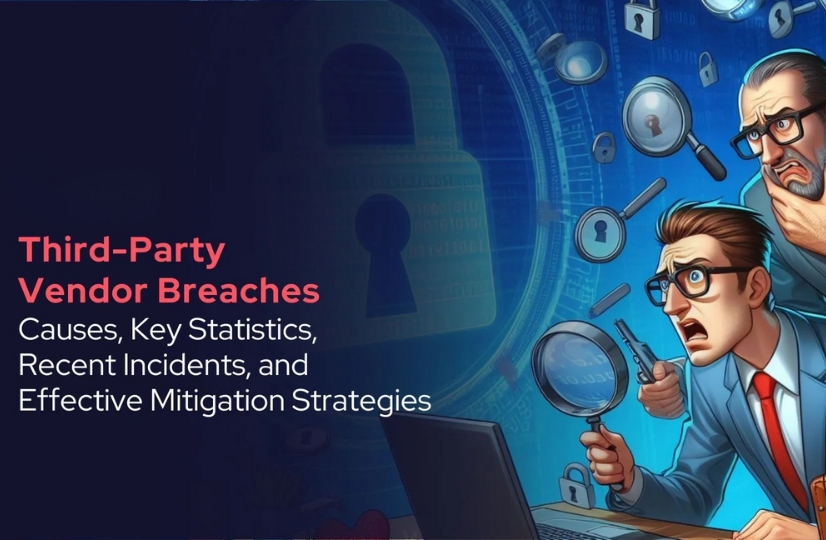
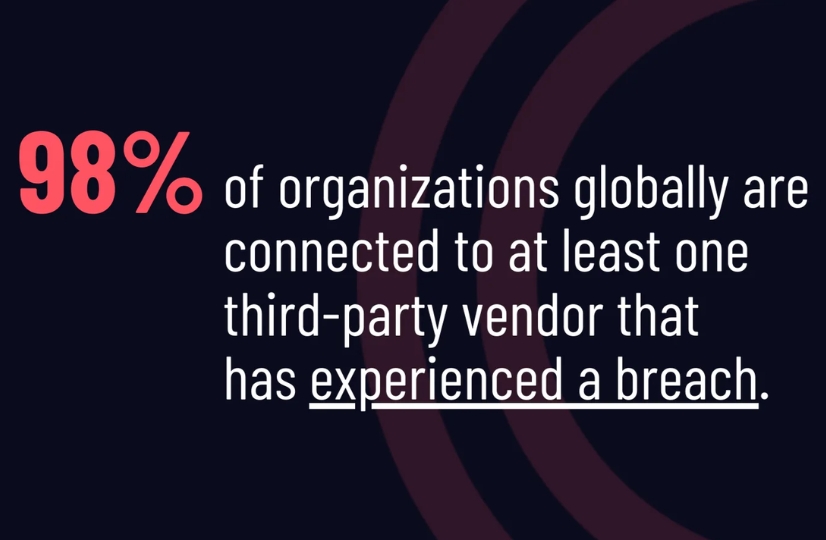
Global enterprises now rely on thousands of third-party vendors for authentication, software distribution, logistics management, payments, and cloud services. This interconnected ecosystem has created a massive supply chain attack surface that cybercriminals exploited aggressively throughout 2025. Rather than targeting well-defended enterprises directly, attackers shifted to vendors with weaker controls and used them as infiltration vectors into higher-value targets. The domino effect of these vendor compromises impacted critical sectors including finance, healthcare, energy, and manufacturing.
The most disruptive breaches involved trusted service providers such as software integrators, firmware update distributors, and managed security platforms. Attackers injected malicious components into legitimate build pipelines, compromising thousands of downstream customers at once. This highlighted the persistent challenges surrounding software supply chain trust, component transparency, and vendor auditability at runtime.
Modern supply chain breaches no longer exploit vulnerabilities — they exploit trust. Vendors become the new perimeter, and without visibility into their processes, organizations inherit their risks.
One of the strongest lessons from 2025 involved enforcing Software Bill of Materials (SBOMs). By requiring vendors to disclose cryptographic hashes of all components, dependencies, and sub-dependencies, organizations gained visibility into what they were running in production. Several enterprises used SBOM validation to quickly identify compromised libraries and revoke trusted certificates during attack windows, reducing lateral propagation across cloud workloads.
Vendor audits also evolved beyond questionnaire-based risk assessments. Organizations began requiring real-time posture monitoring, MFA enforcement, endpoint telemetry sharing, and logs for workload execution environments. Critical vendors underwent red-team evaluations to ensure exploit resistance at both the infrastructure and process layers. Runtime monitoring tools detected anomalous build behaviors, unauthorized code injections, and credential misuse, preventing compromised components from entering production ecosystems.
The next phase of supply chain security requires standardized policies across regulatory, contractual, and operational domains. Cyber insurance carriers now require evidence of vendor segmentation, identity validation, SBOM attestation, and incident response playbooks for suppliers. Organizations that treated supply chain security as a shared responsibility model demonstrated faster recovery times and significantly lower breach propagation impacts throughout 2025.
Securozen Team
Cyber supply chain risk strategist focused on vendor auditing frameworks, SBOM validation, and ecosystem-level breach containment across enterprise and critical infrastructure environments.
Reviews

Rohit Sharma
SBOM coverage and runtime validation are becoming essential. Very relevant analysis for enterprises with multi-region vendor stacks.

Aman Kumar
The vendor audit evolution part was particularly insightful. Runtime monitoring is where the next maturity level will be.
Leave a Comment